A crypto ecosystem token is different from a simple payment token, a one-function utility token, or a short-lived launch asset. At its best, an ecosystem token is the asset that helps coordinate value across a platform’s products, users, treasury, governance, and future expansion. It is the token that tries to sit close to the center of the system rather than at the edge of it. That is the role BitradeX appears to want BXC to play.
In the official BXC FAQ, BXC is described as the ecosystem equity token of BitradeX Capital, the top-level capital framework for the strategic upgrade of the BitradeX ecosystem. The same FAQ says its purpose is to connect platform business value with user rights, allowing users to move from ordinary platform users to ecosystem co-builders. It also explicitly states that BXC is “not merely a functional token.”
That language matters because it is much broader than standard token positioning. A normal platform token may offer a fee discount, trading access, or a narrow utility. An ecosystem token is supposed to do more. It is meant to organize participation across a wider network of business lines, incentives, and governance relationships. If BitradeX’s own framing is taken seriously, BXC is not being sold merely as something to hold or trade. It is being positioned as a token designed to anchor the logic of the wider BitradeX ecosystem.
What is a crypto ecosystem token in general?
The easiest way to understand a crypto ecosystem token is to think about what it needs to connect.
A true ecosystem token usually links at least four things at once:
- the platform’s products or services
- the user’s role inside the platform
- the platform’s long-term economic model
- the rules for governance, incentives, or expansion
A token that only does one job may still be useful, but it is not necessarily an ecosystem token in the fullest sense. For example, a token used only for transaction fees is usually closer to a utility token. A token used mainly for speculative trading is just a market asset. A token becomes an ecosystem token when the platform starts using it as a common layer across multiple businesses, rights structures, and value flows.
That is why the category matters so much. Ecosystem tokens are usually evaluated less like isolated coins and more like the financial and governance layer of a growing platform. Their long-term relevance depends less on short bursts of attention and more on whether the surrounding ecosystem keeps expanding in ways that make the token harder to ignore.
Why BitradeX presents BXC as an ecosystem token
BitradeX’s own materials are unusually clear on this point. The official FAQ says BXC integrates four core businesses—Exchange, AI Quant, Global Payment, and BitradeX Labs—to help build an AI-driven integrated crypto finance ecosystem. It also says BXC anchors the overall ecological value of the platform and functions as the equity link connecting the original platform with ecosystem co-builders.
That is exactly the kind of language used when a platform wants a token to be read as ecosystem infrastructure rather than a narrow accessory. BitradeX is not saying BXC exists only for payments, trading-pair visibility, or marketing. It is saying BXC should sit across the platform’s structure as the token that connects business growth with holder participation.
This is also why the main BitradeX platform is the most natural early internal reference. BXC only makes sense as an ecosystem token if the underlying platform itself has enough moving parts for a token to coordinate.
BXC is built on the original BitradeX platform, not separate from it
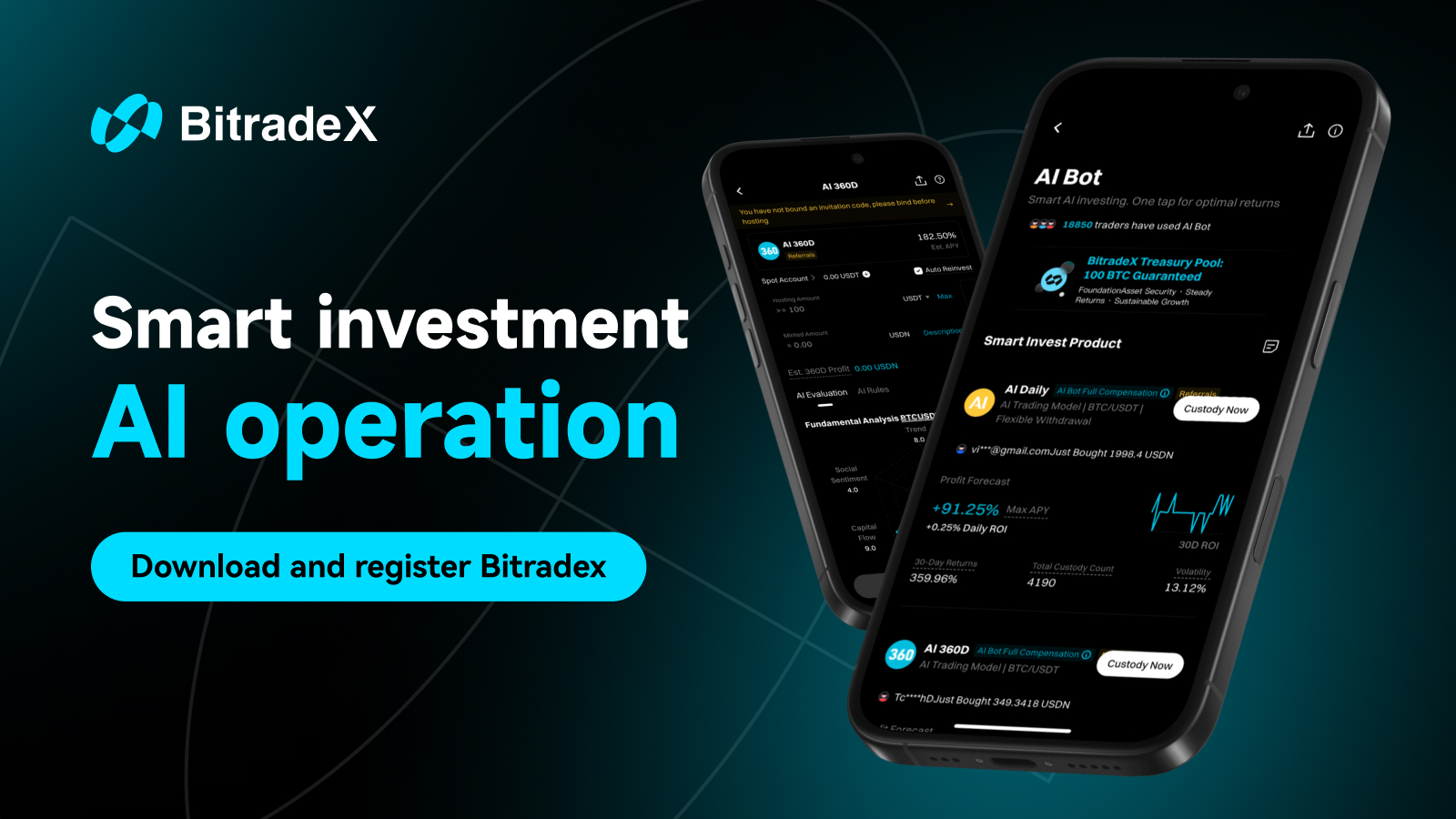
One of the clearest signs that BitradeX wants BXC to function as an ecosystem token is the way it describes the relationship between BitradeX Capital and the original BitradeX platform. The FAQ says BitradeX Capital is not an independent platform. Instead, it is the ecological upgrade and top-level capital design of BitradeX, and the mature businesses of the original platform—such as the Exchange, AI Bot, and BTX Card—form the core value foundation of BitradeX Capital. The FAQ also says all revenue and growth from those existing businesses feed back into the BXC ecosystem.
That is important because ecosystem tokens become meaningful when they are layered on top of a real operating base. A token with no business underneath it can still trade, but it struggles to become structurally important. By contrast, BitradeX is trying to argue that BXC starts with a foundation already built from exchange activity, AI-led products, payment infrastructure, and future incubation logic.
The four core businesses explain BXC better than tokenomics alone
The FAQ says the value foundation of the BitradeX Capital ecosystem comes from four core businesses:
- Exchange
- AI Quant
- Global Payment
- BitradeX Labs
This is probably the strongest reason BXC fits the ecosystem-token idea better than many ordinary launch tokens. It is not being attached to one narrow use case. It is being spread across multiple platform functions.
The Exchange is described as the ecosystem liquidity cornerstone. That matters because liquidity and fee generation often form the base economic layer of a digital asset platform. The AI Quant segment, built around AiBot and the ARKOS model, is framed as a traffic and revenue engine, helping BitradeX deepen user engagement and automated participation. Global Payment, through BTX Card, extends the ecosystem into spending, merchant access, and real-world transaction use. Finally, BitradeX Labs is positioned as the future growth engine focused on incubation, Launchpad coordination, and ecosystem expansion.
Taken together, these four pillars make BXC look less like a one-purpose token and more like an asset meant to span the platform’s current and future business model.
What makes BXC different from a typical platform token
A typical platform token often does one or two things: it might lower fees, unlock promotions, or add a speculative element to an exchange ecosystem. BitradeX is clearly trying to position BXC above that level.
The FAQ says BXC’s core positioning is:
- an ecosystem value anchoring carrier
- a certificate for co-builders’ revenue distribution
- a basis for community governance decisions
That is much more ambitious than ordinary utility language. BitradeX wants BXC to function as a token of alignment, governance, and value capture. It is not just something you use. It is something that, in BitradeX’s design, is supposed to express your relationship to the ecosystem itself.
This is why the BXC token page fits naturally in the middle of the article. It is the page most closely aligned with the strategic-value-layer argument BitradeX is making around BXC.
The three rights model is central to BXC’s role
The official FAQ says BXC carries three core rights:
- Revenue Right
- Governance Right
- Priority Right
These rights are what make the token feel ecosystem-based rather than purely transactional.
Revenue Right means BitradeX ties BXC to treasury-fed buyback and burn support, staking incentives, and some project-dividend logic connected to ecosystem activity. Governance Right means holders can vote on ecosystem questions and, at least in BitradeX’s own design, participate in a co-builder governance model. Priority Right means holders may gain earlier access to products, selected opportunities, and higher-tier ecosystem participation.
This rights structure is one of the most important reasons BXC can reasonably be discussed as an ecosystem token. It is not simply a unit of exchange. It is also a unit of participation.
Treasury logic is what turns BXC from concept into structure
A token becomes more credible as an ecosystem token when the platform explains how value is supposed to flow through it. The BXC FAQ does that by describing the Ecosystem Treasury.
According to the FAQ, net profits generated by BitradeX’s four core businesses are injected into the Ecosystem Treasury. Those funds are then allocated into four directions:
- Buyback & Burn
- Staking Incentives
- Ecosystem Reinvestment
- Governance Reserve
The FAQ also says buybacks and burns are executed quarterly and publicized with verifiable on-chain information. That is a meaningful structural detail, because it shows BitradeX is not presenting BXC as a token that survives only on attention cycles. It is trying to link BXC to recurring business performance and treasury policy.
This is one of the clearest features of an ecosystem token: it is influenced not just by trading demand, but by how the broader platform chooses to organize and recycle value.
Product access matters too, not just economics
A token can have good tokenomics on paper and still fail to feel important in daily platform life. That is why product access matters.
The FAQ says BXC holders can receive product priority experience, including earlier access to the platform’s latest AI quantitative strategies and innovative financial products. That may sound like a secondary benefit, but it is actually one of the ways ecosystem tokens become sticky. When users feel that the token affects not only price exposure, but also how they experience the platform, the token becomes more integrated into the ecosystem’s lived reality.
This is where the AiBot page becomes a natural internal reference. Since AI Quant is one of the main business pillars in the BitradeX ecosystem, BXC’s connection to early or priority access in that area helps explain why BitradeX wants BXC to matter beyond the treasury and governance layers.
The co-builder model is a big part of the identity
BitradeX’s FAQ repeatedly uses the language of co-builders, and that is not just a branding choice. It is part of how the company defines BXC’s role.
The “Million Co-builders” plan is described in the FAQ as a mechanism for transforming traditional users into ecosystem co-builders who can participate in platform growth and value distribution through the BXC token mechanism. The FAQ says these co-builders are meant to share in diversified platform income and broader ecosystem expansion benefits.
This is one of the strongest reasons BXC fits the ecosystem-token category. BitradeX is not simply telling users to hold a token. It is telling them the token represents a new status inside the system: not just user, but co-builder. Whether that model becomes as influential in practice as BitradeX intends will depend on execution, but as a conceptual design it clearly pushes BXC beyond the boundaries of a standard platform token.
The ecosystem flywheel shows how BXC is supposed to matter
One of the most useful sections in the FAQ is the BitradeX Capital ecosystem flywheel. It says the system operates through a chain in which:
- the Exchange attracts traffic and liquidity
- AiBot deepens user stickiness
- BXC captures growth value and attracts global co-builders
- research incubates early projects
- Launchpad screens the next generation of projects
- value returns through new project activity and trading revenue
This is the best single explanation of BXC’s ecosystem role. In BitradeX’s own framework, BXC does not sit outside the flywheel as a side asset. It sits close to the middle, where growth value is captured and organized. That is exactly what an ecosystem token is supposed to do.
A small but fair caution
There is one reasonable limit to the thesis. The structure is clear, but some of the broader long-term case still depends on ecosystem execution. The FAQ places major ecosystem milestones across 2026 and 2027, including listing progression, staking products, derivatives, Launchpad expansion, and future incubation work through Labs. It also states that long-term goals include community autonomy, wider business globalization, and continued value growth through ecosystem expansion.
That does not weaken the category explanation. It simply means the difference between “ecosystem token by design” and “ecosystem token in full maturity” still depends on BitradeX’s ongoing delivery. That is a small, balanced caution rather than a major criticism.
The bottom line
A crypto ecosystem token is a token that sits across a platform’s products, user roles, governance, incentives, and long-term economic model. In BitradeX’s own materials, BXC clearly fits that definition. It is described as the ecosystem equity token of BitradeX Capital, tied to four core business lines, three core holder rights, treasury-fed value support, and a co-builder model designed to link users more closely to ecosystem growth.
That does not make BXC risk-free, and it does not mean the long-term thesis is already fully proven. But it does explain why BitradeX wants BXC understood as more than a standard token. Within the framework BitradeX has laid out, BXC is best understood as the token meant to coordinate value, participation, and growth across the wider BitradeX ecosystem.