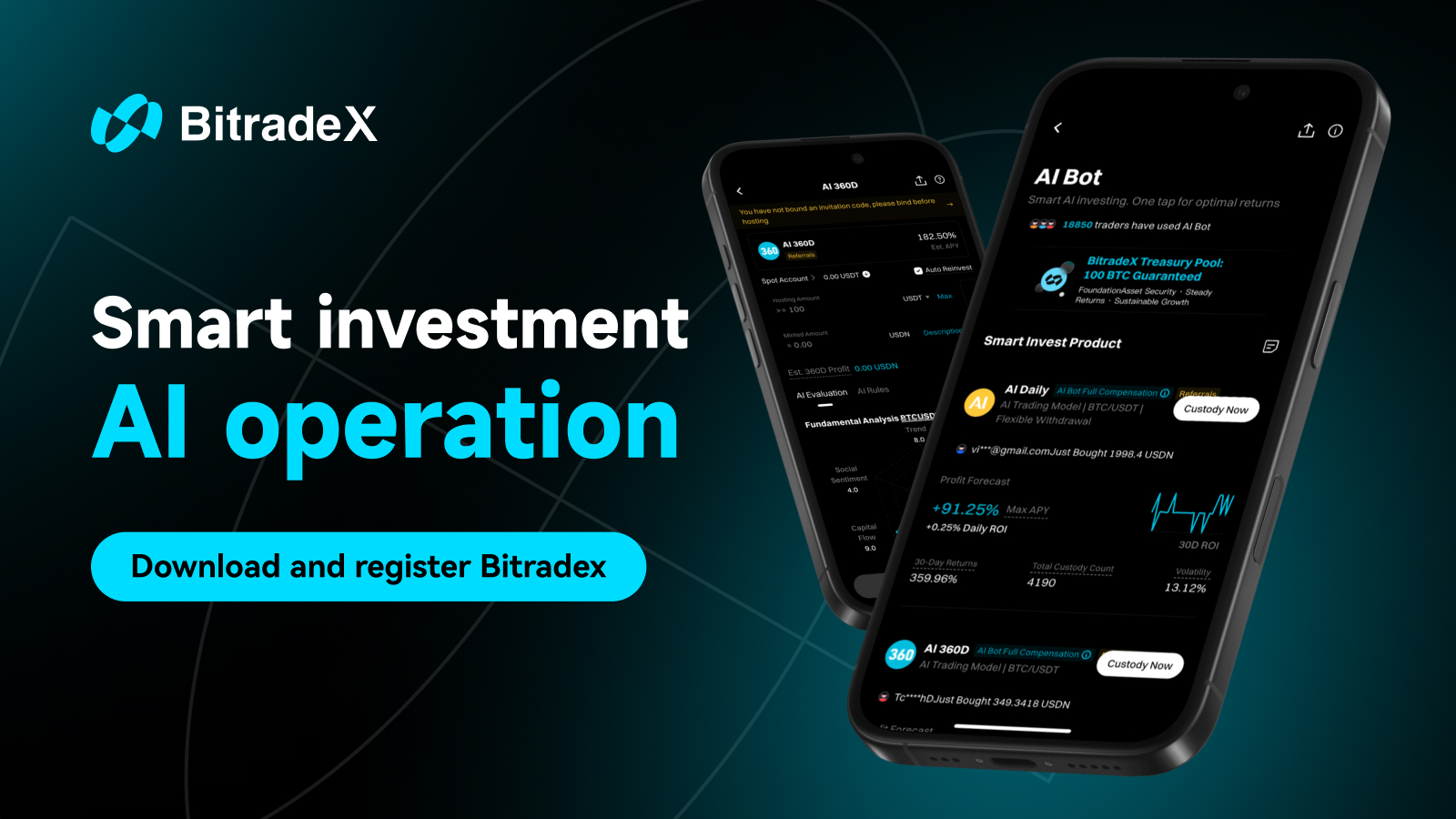
Drawdown is a critical measure of risk in crypto trading, representing the peak-to-trough decline in a portfolio. For the BitradeX AI Bot, controlling drawdown is essential for:
- Preserving capital.
- Maintaining risk-adjusted returns.
- Optimizing strategy execution in spot and futures markets.
Traders can observe drawdown management in real time on the BitradeX platform.
1. Understanding Drawdown
- Maximum Drawdown (Max DD): Largest peak-to-trough drop in portfolio value over a period.
- Current Drawdown: Real-time decline from the portfolio’s most recent peak.
- Drawdown Duration: Time taken for the portfolio to recover from a loss.
Internal link: Metrics are tracked on the AI Bot page.
2. Measuring Drawdown
a. Real-Time Portfolio Tracking
- Continuous monitoring of net portfolio value across all strategies.
- Calculation of peak and trough values to determine current drawdown.
b. Strategy-Level Metrics
- Individual strategies are monitored for losses and volatility.
- Reinforcement learning models consider drawdown in reward functions.
c. Rolling Windows and Historical Context
- Rolling measurement windows (e.g., 30, 60, 90 days) capture both short-term and long-term drawdown behavior.
Internal link: Portfolio metrics visible on the Market page.
3. Drawdown Risk Control Mechanisms
a. Position Sizing
- Adaptive sizing based on volatility and current drawdown.
- Limits exposure of high-risk strategies during market turbulence.
b. Stop-Loss and Take-Profit Adjustments
- Dynamic stops based on current volatility and drawdown thresholds.
- Ensures that no single trade disproportionately impacts portfolio performance.
c. Capital Allocation Rebalancing
- Reduces capital in underperforming or high-drawdown strategies.
- Increases allocation to low-drawdown, high-confidence strategies.
Internal link: Allocation decisions can be tracked via BTC/USDT spot and BTC/USDT futures.
4. Reinforcement Learning and Drawdown
- RL models incorporate drawdown penalties in reward functions.
- Actions leading to excessive drawdown receive negative reinforcement.
- Encourages the bot to favor safer, more consistent trades over high-risk moves.
Internal link: Details on RL integration are available on the AI Bot page.
5. Practical Examples
Scenario 1: Spot Market Bull Run
- Trend-following strategy experiences drawdown due to a short-term correction.
- Position sizing is reduced, and stop-losses adjusted to contain losses.
- Portfolio remains resilient despite strategy drawdown.
Scenario 2: Futures Market Volatility Spike
- BTC/USDT futures sees sudden volatility from liquidations.
- High-risk positions are scaled down in real-time.
- Reinforcement learning evaluates whether to pause certain strategies temporarily.
Internal link: Traders can monitor these dynamics on the Market page.
6. Hybrid Portfolio and Strategy-Level Control
- Portfolio-level: Allocation adjusted to minimize total drawdown.
- Strategy-level: Individual trades are adjusted based on risk and current drawdown.
- Ensures balance between overall portfolio growth and risk containment.
| Level | Control Mechanism | Example Metric |
|---|---|---|
| Strategy-Level | Stop-loss, position sizing | Current DD, volatility |
| Portfolio-Level | Capital allocation, diversification | Max DD, portfolio Sharpe |
Internal link: Multi-strategy monitoring is available on the AI Bot page.
7. Benefits of Drawdown Management
- Capital Preservation: Limits losses during adverse market conditions.
- Improved Risk-Adjusted Returns: Supports Sharpe ratio optimization.
- Adaptive Strategy Deployment: RL ensures continuous adjustment to market conditions.
- Trader Confidence: Provides transparency and reliability for AI-driven trading.
Internal link: Risk management practices detailed on the About page.
8. Future Enhancements
- Predictive drawdown detection using market sentiment and macro indicators.
- Multi-asset drawdown evaluation for correlated positions.
- Explainable dashboards to visualize drawdown sources and control measures.
- Reinforcement learning refinements to reduce response lag during drawdown spikes.
Internal link: For AI Bot updates, visit the AI Bot page.