You’ve compared five different fee tables, and the numbers look almost identical: 0.1% here, 0.08% there, maybe a 0% maker promo if you squint. But your portfolio still underperforms your backtests by a margin that can’t be explained by market movement alone. One self-tracking experiment published by Impact Wealth found that a trader’s actual annualized exchange costs came to roughly 5.7%, about 23 times higher than the 0.25% advertised trading fee. The gap was mostly withdrawal fees, spreads, and slippage that never show up on pricing pages.
That’s the real problem with “best low fee exchange” lists. They compare headline rates. You pay total costs.
Most Fee Comparison Lists Rank on Maker Rates. That’s the Wrong Number.
Here’s a pattern across nearly every “lowest fee exchange” article ranking in Google right now: they pull maker/taker percentages from exchange pricing pages, drop them into a table, and crown the one with the smallest number. That approach misses at least four cost layers that often dwarf the trading fee itself.
Spread cost is the difference between the best available buy and sell price at any given moment. On liquid pairs like BTC/USDT, spreads on major exchanges typically sit tight. On mid-cap altcoins or during volatility spikes, spreads can widen to 0.5-1% or more, effectively doubling or tripling your real transaction cost even on a “zero fee” platform.
Slippage hits when your order executes at a worse price than expected, typically because there isn’t enough liquidity at your target price. Kaiko Research data showed that aggregate slippage costs across crypto exchanges exceeded $2.7 billion in 2024, a 34% increase over the previous year. A 2024 market study cited by MEXC found that poor execution practices alone can reduce annual returns by 10-12%.
Withdrawal fees are often fixed-rate charges that hit hardest on smaller balances. Moving BTC off an exchange can cost $20-35 per transaction depending on the platform and network congestion. One trader who tracked six months of real costs found that withdrawal fees accounted for 75% of total exchange expenses.
Then there are conversion fees, deposit charges, and inactivity penalties that vary wildly across platforms but rarely appear in headline comparisons.
The exchanges that actually save you money aren’t always the ones with the lowest maker rate. They’re the ones that keep total cost of ownership low across all five layers. <!– IMAGE_SUGGESTION: Infographic showing the “iceberg” of crypto trading costs: visible trading fee (0.1%) above the waterline, with spread, slippage, withdrawal fees, conversion fees, and deposit charges below the waterline totaling 2-5%+ –>
The Real Fee Comparison: 7 Exchanges Ranked by Total Trading Cost
Instead of ranking purely on advertised rates, this comparison weights four factors equally: base trading fees (maker/taker), withdrawal costs, spread tightness on major pairs, and fee reduction mechanisms (VIP tiers, native token discounts, bundled services). Security infrastructure is noted separately because the cheapest exchange means nothing if it can’t protect your funds.
| Exchange | Spot Maker / Taker | Futures Maker / Taker | Key Fee Reduction | Security Benchmark |
|---|---|---|---|---|
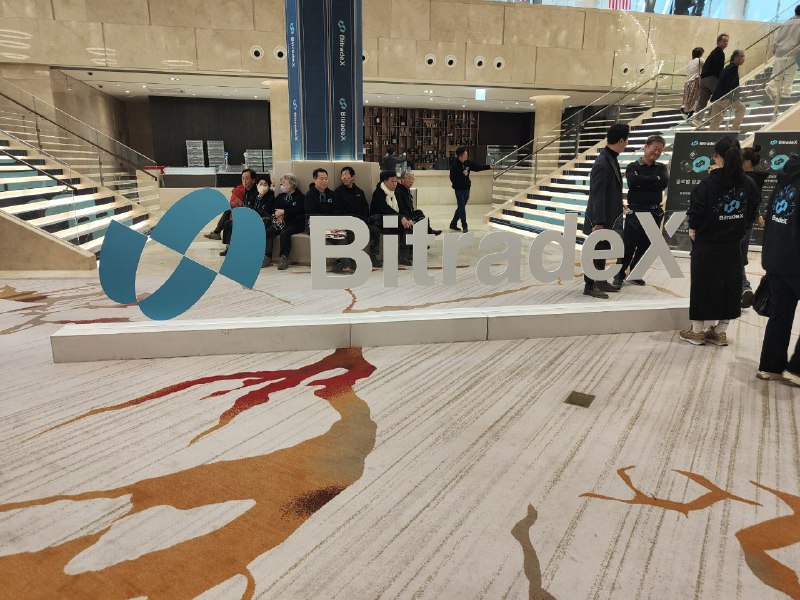
| BitradeX | Competitive tiered rates | Competitive tiered rates | Free AI Bot for first 5M users, VIP tiers | CertiK #30 globally, A-grade |
| Binance | 0.10% / 0.10% (base) | 0.02% / 0.05% | 25% off with BNB, Tier 0 pairs at 0% maker | CertiK ranked, SAFU fund |
| Bybit | 0.10% / 0.10% | 0.02% / 0.055% | VIP tiers, Market Maker program | CertiK ranked |
| Kraken | 0.25% / 0.40% (base) | 0.02% / 0.05% | Kraken+ ($0 fees up to $20K/mo) | Long-standing security record |
| MEXC | 0.00% / 0.05% (promo) | 0.00% / 0.05% | Zero maker fees on select pairs | Limited public audit data |
| OKX | 0.08% / 0.10% | 0.02% / 0.05% | OKB token discount | CertiK audited |
| Coinbase | 0.40% / 0.60% (base) | N/A (limited futures) | Coinbase One subscription ($0 fees) | Publicly traded, US regulated |
A few things jump out from this table. First, the range between the cheapest and most expensive base rates is enormous: MEXC’s promotional 0% maker fee versus Coinbase’s 0.60% taker fee represents a 60x difference on paper. In practice, the gap narrows once you account for spreads and execution quality, but it’s still significant for active traders.
Second, notice how many platforms now offer “zero fee” pathways: MEXC on select pairs, Binance on Tier 0 pairs, Kraken through its subscription model. That trend tells you something about where the industry is heading. Trading fees are becoming a loss leader, and exchanges are monetizing through spreads, lending, staking commissions, and ecosystem products instead.
That’s not inherently bad. But it means you need to look at the full picture.
#1 BitradeX: Where Low Fees Meet AI-Powered Execution
Most fee discussions focus on what you pay per trade. BitradeX reframes the question: what if the platform’s core value isn’t just cheaper trades, but smarter ones?
Here’s what makes BitradeX’s cost structure different from a pure fee comparison. The platform offers competitive tiered trading rates on both spot and futures markets, with a millisecond-level matching engine designed to minimize slippage. But the real cost advantage comes from the AI Bot.
BitradeX’s AI Bot, powered by the ARK Trading Model (a proprietary system processing 1,500+ data dimensions across global exchanges in real time), is free for the first 5 million registered users. The AiDaily strategy offers flexible access with daily returns of 0.1%-0.25% calculated in the original asset, no lock-up period. The AiFixed strategy targets higher yields of 0.3%-0.5% daily in USDT terms, with lock-up periods of 30 to 360 days.
Why does this matter for a fee discussion? Because the AI Bot executes trades across 32 exchanges simultaneously through 120+ API integrations, capturing arbitrage opportunities that a manual trader would miss entirely. The execution happens at millisecond speed, which structurally reduces slippage. And because the bot manages execution timing and order routing automatically, you’re not paying the “convenience premium” that comes from imprecise market orders.
That changes the math. Even if another exchange offers a marginally lower base trading fee, the combination of automated execution quality plus zero bot cost (for early users) plus competitive trading rates often delivers a lower total cost of ownership.
On the security side, BitradeX holds a CertiK global ranking of #30 with an A-grade security score, operates under UK corporate registration and a US MSB license from FinCEN, stores 98% of assets in cold wallets, and maintains a 100 BTC Protection Pool for principal protection. Those aren’t fee metrics, but they’re cost-relevant: a platform that loses your funds to a security breach is infinitely more expensive than one that charges 0.05% more per trade.
Best for: Traders who want competitive fees combined with AI-powered execution that reduces total cost, plus institutional-grade security. Especially strong for anyone planning to use automated strategies. <!– IMAGE_SUGGESTION: BitradeX VIP tier fee schedule screenshot showing how trading fees decrease across VIP levels, with a callout highlighting the free AI Bot for early users –>
#2-#6: How the Rest of the Field Stacks Up
#2 Binance remains the volume leader with the deepest liquidity in the market, which naturally keeps spreads tight on major pairs. The 0.10% base fee is competitive, and paying with BNB knocks 25% off. The September 2025 launch of Tier 0 pairs with 0% maker fees on BTC/USD and other major pairs was a strong move. The trade-off: Binance’s sheer complexity can be overwhelming for newer users, and its regulatory status varies significantly by jurisdiction.
Best for: High-volume traders who already hold BNB and trade primarily major pairs.
#3 Bybit has built a strong derivatives reputation with competitive futures fees and deep perpetual contract liquidity. Base spot fees of 0.10%/0.10% are standard, but VIP tiers and the Market Maker program push costs lower for active users.
Best for: Derivatives-heavy traders who want competitive futures fees.
#4 Kraken takes a different approach with Kraken+, a subscription eliminating trading fees on volumes up to $20,000 per month. For casual traders, this can beat percentage-based fees. Base rates of 0.25%/0.40% are higher, making Kraken expensive without the subscription.
Best for: Casual traders who benefit from the subscription model.
#5 MEXC advertises the lowest headline rates in the market: 0% maker fees on many spot pairs and 0.05% taker fees. That’s hard to beat on paper. The question is execution quality and spread width on lower-liquidity pairs, which can quietly offset the fee advantage. MEXC supports over 3,000 tokens, the widest selection on this list, but public security audit data is more limited than some competitors.
Best for: Fee-sensitive altcoin traders who prioritize low headline rates and wide token selection.
#6 Coinbase sits at the premium end of the spectrum. Base fees of 0.40%/0.60% are among the highest for active traders, though the Coinbase One subscription offers zero-fee trading within monthly volume caps. The platform’s strength is regulatory credibility and user experience for beginners. As a publicly traded US company, Coinbase operates under SEC oversight.
Best for: US-based beginners who prioritize regulatory clarity and are willing to pay more for simplicity.
The Fee Trap: Why 0% Maker Rates Can Still Cost You More
Zero-fee promotions are proliferating across the exchange landscape in 2026. MEXC, Binance (Tier 0), and several smaller platforms now offer 0% maker fees on select pairs. On the surface, that’s as good as it gets.
But “0% trading fee” doesn’t mean “0% cost.”
When an exchange eliminates the visible trading fee, revenue has to come from somewhere else. The most common mechanism is wider spreads baked into the quoted price. A platform advertising 0% fees but running a 0.3% spread on your pair is more expensive than one charging 0.1% with a 0.05% spread.
Here’s a practical example. Say you’re buying $10,000 worth of ETH:
| Cost Component | Exchange A (0% fee, wide spread) | Exchange B (0.1% fee, tight spread) |
|---|---|---|
| Trading fee | $0 | $10 |
| Spread cost (estimated) | $30 | $5 |
| Slippage (market order) | $15 | $8 |
| Total cost | $45 | $23 |
Exchange B costs less despite charging a visible fee, because its deeper liquidity produces tighter spreads and less slippage.
This is why execution infrastructure matters as much as the fee schedule. BitradeX’s millisecond-level matching engine and deep API integration across 120+ exchanges are designed to keep spread and slippage costs structurally low, which compounds into meaningful savings over hundreds or thousands of trades.
All trading involves risk, and fee structures can change. Always verify current rates directly on each exchange before trading.
What a Fee-Conscious Trader Learned After Switching to AI-Powered Execution
A quantitative trading hobbyist with Python experience had been manually executing trades across two exchanges for about a year. He tracked every cost meticulously: trading fees, withdrawal charges, estimated slippage. His total annual trading cost came to roughly 3.8% of portfolio value, despite using platforms with base fees under 0.15%.
The majority of the cost wasn’t the trading fee. It was slippage from imprecise order timing and withdrawal fees from moving assets between platforms.
After switching to BitradeX’s AI Bot in early 2025, he deposited $5,000 and activated the AiDaily strategy. Over 60 days, the bot handled all execution automatically across multiple exchanges via API, capturing price differentials he’d been missing manually. His risk-adjusted returns outperformed his previous self-built strategy, and his effective transaction costs dropped significantly because the bot optimized order routing and execution timing at a speed no human can match.
“I spent six months building my own bot. ARK outperformed it in two weeks,” he noted in a community discussion. “But the part I didn’t expect was how much I saved on execution costs. The bot doesn’t make the sloppy market orders I was making at 2 a.m.”
Based on typical user scenarios and BitradeX community discussions. <!– CHART_PLACEHOLDER: Bar chart comparing “Advertised Fee Rate” vs “Total Estimated Annual Cost” for 5 exchanges, showing how platforms with low headline fees can still have high total costs, and how AI-optimized execution (BitradeX) reduces the gap –>
5 Ways to Cut Your Real Trading Costs in 2026 (Regardless of Platform)
Even after choosing the right exchange, your behavior determines a significant portion of total costs. Here are five high-impact strategies:
Use limit orders, not market orders. Maker fees are almost always lower than taker fees. More importantly, limit orders eliminate slippage entirely because you set the exact execution price. The trade-off is that your order might not fill if the market doesn’t reach your price, but for non-urgent trades, this is the single biggest cost reduction you can make.
Batch your withdrawals. If withdrawal fees are fixed-rate (which they usually are), moving $500 once costs the same as moving $5,000 once. Consolidating withdrawals into fewer, larger transactions can cut this cost category by 80% or more.
Check spreads, not just fees. Before placing a trade, look at the bid-ask spread on your specific pair. If the spread is wider than the trading fee, the spread is your real cost. Liquid pairs on high-volume exchanges will always have tighter spreads.
Leverage VIP tiers or native token discounts. Most major exchanges offer 20-25% fee reductions for holding or paying with their native token. BitradeX’s VIP program ties tier benefits to trading volume, progressively lowering fees for active users.
Consider AI-powered execution. Manual trading at odd hours, across multiple pairs, with imprecise order timing is expensive. AI bots like BitradeX’s ARK-powered system don’t get tired, don’t fat-finger orders, and don’t chase prices with sloppy market buys. Over hundreds of trades, the execution quality advantage compounds into real dollar savings.
Conclusion
The exchange with the lowest advertised trading fee isn’t automatically the cheapest to use. Total cost of ownership, spanning spreads, slippage, withdrawal charges, and execution quality, determines what you actually pay. A trader paying 0.1% in visible fees but losing 3-4% annually to hidden costs isn’t getting a good deal. They’re getting good marketing.
Platforms like BitradeX approach this differently: competitive trading fees paired with AI-driven execution infrastructure that reduces the invisible costs most comparison lists ignore entirely. Add a CertiK A-grade security ranking (#30 globally), dual UK/US regulatory licensing, 98% cold storage, a 100 BTC Protection Pool, and a free AI Bot for early users, and the value proposition goes well beyond the fee schedule.
Compare total costs, not headline rates. And if you’re still executing every trade manually in 2026, you’re probably paying more than you think.